Broadband SWIR and Hyperspectral Material Analysis
SWIR and Hyperspectral Material Identification
Distinguish materials that look similar in visible light by measuring how they
reflect and absorb short-wave infrared wavelengths. Pembroke Instruments supplies
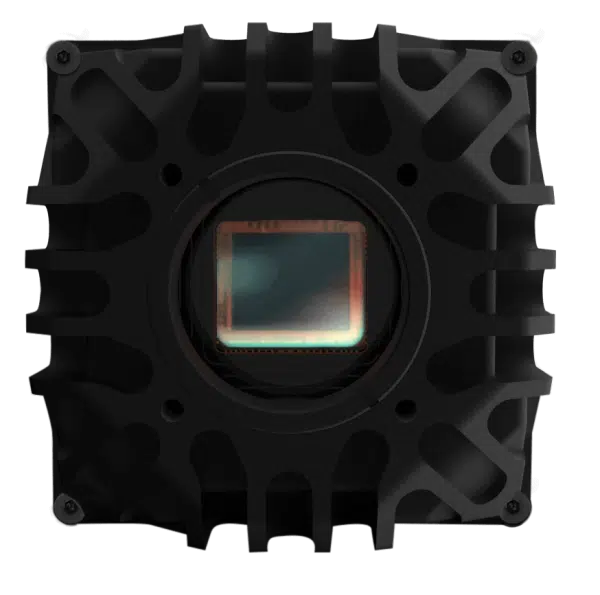
both high-performance InGaAs SWIR cameras and hyperspectral imaging systems for
material identification, automated sorting, moisture-sensitive classification,
quality inspection, research and industrial machine vision.
Differentiate visually similar objects by material composition
Use moisture-sensitive SWIR bands to improve contrast
Use broadband or filtered SWIR imaging when the key contrast bands are known
Use hyperspectral data when full material signatures or many classes are required
SWIR hyperspectral imaging for material signatures, automated classification and machine-vision integration.
Broadband SWIRFast 900-1700 nm area-scan imaging
Filtered SWIRTarget selected absorption bands
HyperspectralA spectrum at every image location
VNIR to 2500 nmChoose the range that matches the material
Why Visible Imaging Can Be Ambiguous
Identify Materials by Physical Response, Not Appearance Alone
Conventional RGB cameras classify objects primarily from visible color, shape and
texture. That approach can fail when different materials share a similar appearance,
when illumination changes, or when printed images and artificial objects resemble
the real object being detected.
SWIR imaging adds information about how a material reflects and absorbs infrared
light. Organic materials, plastics, textiles, coatings, moisture-bearing products and
other substances can produce different SWIR intensity or spectral signatures even
when their visible appearance is nearly identical.
Material identification can use one band or a full spectrum
A filtered InGaAs camera may be sufficient when the discriminating wavelength is
known. Applications with many materials or variable conditions may benefit from
multispectral or hyperspectral imaging and classification algorithms.
Published research demonstrates the potential
A 2024 study comparing visible and SWIR data reported substantially improved
classification of visually similar real and artificial objects when material-sensitive
SWIR information was used. The study also demonstrated object detection using
selected SWIR bands and deep learning.
99%Reported SWIR classification accuracy in the study
77%Reported visible-spectrum comparison
0.98Reported mAP for human detection using SWIR data
Results were obtained under the study's datasets and conditions and should not be interpreted as guaranteed performance for other applications.
Two Complementary Imaging Approaches
Broadband SWIR Cameras and Hyperspectral Imaging
Both technologies use wavelength-dependent material response, but they solve different
levels of classification complexity. The best choice depends on how many materials must
be separated, whether the useful bands are already known and how quickly the system must operate.
Broadband or Filtered SWIR
Fast Imaging When the Contrast Mechanism Is Known
A standard InGaAs camera records a two-dimensional SWIR image at high spatial
resolution and frame rate. Bandpass filters, long-pass filters or multiple
illumination wavelengths can isolate known material-sensitive bands.
Best for two-class or limited-class inspection
High frame rate and straightforward machine-vision integration
Useful for moisture, transmission and selected reflectance differences
Full Spectral Signatures for Complex Classification
A hyperspectral system records many narrow wavelength channels. The resulting
data cube contains two spatial dimensions plus a wavelength dimension, allowing
algorithms to compare complete spectral signatures rather than one broadband intensity.
Best for many material classes or unknown discriminating bands
Supports spectral libraries, chemometrics and machine learning
Available in VNIR, SWIR and extended-SWIR wavelength ranges
Snapshot, pushbroom, line-scan and laboratory architectures
Why Hyperspectral Imaging Is Powerful for Material Identification
A visible or broadband SWIR image assigns one intensity value to each pixel.
A hyperspectral image assigns a complete spectrum to each pixel. This makes it
possible to map material composition across the scene and separate substances
with similar color, texture or brightness.
Locate absorption features across many contiguous wavelength bands
Build spectral libraries for known materials and contaminants
Use PCA, spectral-angle methods, chemometrics or machine-learning classifiers
Generate material maps rather than a single grayscale image
Identify polymers, minerals, coatings, food products and mixed waste streams
Hyperspectral Data Cube
Two image dimensions show where the material is located. The wavelength dimension
shows how each location responds across the selected spectral range.
Spectral Band Selection
Choose Wavelengths That Expose Material Differences
Material discrimination improves when the selected wavelengths correspond to
meaningful reflectance or absorption differences rather than simply providing a
brighter image.
~1000-1100 nmReference region with relatively weaker water absorption in many samples
~1300-1350 nmIntermediate response useful for comparison and multi-band classification
~1450-1600 nmStrong moisture-related absorption can improve organic/material contrast
Full SWIR SpectrumHyperspectral data supports multi-material identification and spectral libraries
Primary Applications
Applications for SWIR and Hyperspectral Material Identification
1
Recycling and Waste Sorting
Differentiate plastics, polymers, paper, textiles, organic material and contaminants on moving conveyors. Hyperspectral line-scan systems can classify multiple materials from their spectral signatures.
2
Food and Agricultural Inspection
Evaluate moisture and composition, distinguish real from artificial products, identify foreign material and classify produce using filtered SWIR or hyperspectral data.
3
Industrial Quality Control
Separate products, coatings or components that have similar visible appearance
but differ in composition, moisture, curing state or material type.
4
Robotics and Autonomous Systems
Add material-sensitive information to visible imaging so perception systems can
reduce false detections caused by printed images, mannequins or look-alike objects.
5
Textile and Polymer Identification
Use hyperspectral signatures to classify fibers, fabrics, plastics and blended materials for incoming inspection, sorting, recycling or process monitoring.
6
Research and Dataset Development
Acquire synchronized SWIR images or spectral cubes for algorithm development,
machine learning, multimodal fusion and material-classification studies.
Application Development Workflow
From Sample Evaluation to Automated Classification
1. Define the Classes
Identify which materials must be separated, what variation is expected and which
mistakes are most costly to the process.
2. Acquire Spectral Data
Collect broadband SWIR, filtered multi-band or hyperspectral data under realistic
illumination, working-distance and motion conditions.
3. Select Useful Bands
Compare reflectance, absorption and class separation to determine whether a single
band, several bands or a full spectrum is required.
4. Build the Classifier
Use thresholds, spectral matching, chemometrics, machine learning or deep learning
according to application complexity and available training data.
5. Validate Robustness
Test new samples, suppliers, temperatures, moisture levels, orientations and
illumination changes rather than validating only on the training dataset.
6. Integrate the System
Confirm frame rate, conveyor speed, trigger timing, field of view, software output,
reject mechanism and industrial communication requirements.
Hyperspectral Product Options
Choose the Wavelength Range and Acquisition Architecture
Pembroke offers systems for VNIR, standard SWIR and extended SWIR material
identification, with architectures for laboratory studies, moving conveyors,
scanning stages, dynamic scenes and OEM integration.
SWIR Hyperspectral System
Standard SWIR spectral imaging for polymers, moisture, food, coatings,
recycling and industrial material classification in the approximately
900-1700 nm range.
SWIRMaterial identificationLaboratory and industrial
Extended response toward 2500 nm can expose additional absorption features
used for polymers, minerals, chemicals, powders and demanding material-analysis applications.
Build high-quality spectral data cubes as products move under the camera or
as the system scans across a stationary sample. Well suited to conveyor sorting
and laboratory mapping.
Acquire multiple spectral bands without mechanically scanning the scene.
Useful for moving objects, dynamic measurements, drones and compact OEM systems.
Seven Requirements to Define Before Selecting a System
1. Materials and Variability
Define every target class, acceptable variation, contamination and unknown material that may enter the scene.
2. Spatial Resolution
Determine the smallest object or defect and how many pixels must cover it for reliable classification.
3. Spectral Resolution
Decide whether a broad SWIR image, selected filters, multispectral bands or a continuous spectrum is needed.
4. Illumination
Use stable SWIR illumination with sufficient spectral output and geometry appropriate for reflective samples.
5. Process Speed
Match frame rate, line rate, exposure time and data processing to the conveyor or robotic cycle time.
6. Classification Method
Plan thresholds, spectral libraries, PCA, machine learning or deep learning and define confidence limits.
7. Integration
Confirm trigger, interface, SDK, GenICam, data output, PLC communication and reject-system requirements.
Pembroke Application Support
Start with the Material, Not a Camera Specification
Pembroke Instruments can help determine whether your application needs a broadband or filtered InGaAs camera, a high-speed area-scan camera, a pushbroom line-scan system, snapshot hyperspectral imaging or extended-SWIR spectral coverage. Provide representative samples, target classes, field of view,
inspection speed and integration requirements for a more useful recommendation.
SWIR imaging measures differences in infrared reflection and absorption. Materials
that look similar in visible light may have different responses at selected SWIR
wavelengths because of moisture, chemical composition, polymer structure or surface properties.
Can one SWIR wavelength identify every material?
No. A single filtered wavelength may work when one known contrast mechanism
separates two classes. Applications involving many materials, unknown samples or
changing conditions often require several bands or hyperspectral data.
Why is moisture important in SWIR classification?
Water has strong absorption features in parts of the SWIR spectrum. Moisture-bearing
organic material can therefore appear different from dry, synthetic or artificial
material at wavelengths near these absorption regions.
What is the difference between SWIR and hyperspectral material identification?
A conventional SWIR camera records broadband intensity or selected filtered bands.
A hyperspectral system records many contiguous wavelength channels, providing a
spectral signature at each spatial location for more complex classification.
Can SWIR distinguish real products from artificial copies?
It can in suitable cases because real and artificial materials may have different
moisture content and reflectance. Published research has demonstrated this principle
with real and artificial fruits and with humans and visually similar artificial objects.
Can SWIR material identification run on a conveyor?
Yes. Area-scan cameras can inspect discrete objects, while line-scan and
hyperspectral systems are well suited to continuous webs and conveyor sorting.
Line speed, illumination, exposure time and processing latency must be engineered together.
Is machine learning always required?
No. Some two-class applications can use an intensity ratio or threshold. More
variable scenes and multi-class problems often benefit from chemometrics,
machine learning or deep learning.
Can Pembroke help test samples?
Pembroke can review representative samples and application requirements to help
define the appropriate camera type, wavelength range, filters, illumination,
optics and software approach.
Request Technical Guidance or Pricing
Tell Us Which Materials You Need to Separate
For a practical recommendation, include:
Target materials and common look-alike materials
Representative sample dimensions and surface condition
Moisture or composition differences expected
Required field of view and smallest object
Conveyor speed, frame rate or line rate
Laboratory study or production-line deployment
Software, classifier and integration requirements
Pembroke Instruments will recommend a suitable SWIR camera, hyperspectral
system, optics, illumination and acquisition approach.