SWIR Camera Selection Help

Get the Right SWIR Camera for Your Application

Need an InGaAs SWIR camera for semiconductor inspection, laser beam profiling, machine vision, microscopy, spectroscopy, or materials analysis? Pembroke Instruments helps engineers and researchers select the camera, lens, illumination, interface, and software workflow that fits the measurement task.

Tell us what you need to image, the approximate field of view, wavelength range, working distance, frame-rate requirement, and preferred software environment. We will help narrow the best-fit SWIR camera configuration and provide pricing.

  • Application review Camera choice matched to your sample, wavelength, speed, and sensitivity needs.
  • Optics and lighting help Lens, working distance, field of view, and SWIR illumination guidance.
  • Integration support USB3, GigE Vision, Camera Link, CoaXPress, HD-SDI, SDK, and trigger options.
  • Quote-ready guidance Shortlist the right model before spending time on the wrong camera.
900-2500 nm Standard and extended SWIR options
VGA to 2 MP Multiple sensor formats
OEM + Lab Interfaces and software for both

Why Contact Pembroke Before Choosing a SWIR Camera?

SWIR camera performance depends on more than resolution. The best choice depends on wavelength range, cooling level, optics, illumination, frame rate, exposure, interface, and software. A short application review can prevent selecting a camera that lacks the sensitivity, field of view, speed, or integration features required for the job.

Semiconductor Inspection

Image through silicon, inspect wafers, view alignment marks, and evaluate defects with the right sensor size, lens, and NIR/SWIR illumination.

Laser Beam Profiling

Match wavelength, exposure range, frame rate, and attenuation for NIR and SWIR laser viewing or beam alignment.

Machine Vision

Choose the right data port, triggering, SDK, and lighting for production inspection, sorting, and automated measurement.

Research and Microscopy

Select cooling, pixel size, optics, and software for low-light imaging, microscopy, spectroscopy-related imaging, and materials analysis.

Start With Your Application

Use these shortcuts to decide what information to include in your inquiry. The more application detail you provide, the faster Pembroke can recommend a practical SWIR camera configuration.

Need to See Through Silicon?

  • Wafer or device size
  • Field of view and resolution target
  • Backlight wavelength, if known
  • Working distance constraints

Need Moisture or Material Contrast?

  • Material type and sample speed
  • Known absorption wavelength, if any
  • Line-scan vs area-scan preference
  • Lighting geometry

Need Low-Light or Scientific Imaging?

  • Exposure time target
  • Cooling requirement
  • Signal level and wavelength range
  • Preferred image-analysis workflow

Not sure which details matter?

Send a short description of what you want to image. Pembroke can help translate the application into camera, lens, illumination, and software requirements.

Send Application Details ->

How the SWIR Camera Selection Process Works

Describe the Application

Tell us what you need to see, measure, inspect, or detect.

Confirm Requirements

We review wavelength, field of view, speed, sensitivity, optics, and software needs.

Shortlist Cameras

We identify suitable SWIR camera models and integration options.

Quote Configuration

You receive a practical recommendation and configuration-specific pricing.

Talk to an Engineer

Compare SWIR Camera Families

Use the comparison sections below to narrow the camera family, then submit the inquiry form above for a recommendation. Pembroke Instruments helps match sensor format, wavelength range, cooling level, data port type, optics, illumination, and software workflow to the actual measurement task.

Need More Detail?

Choose 2 MP or 1.3 MP SWIR cameras for semiconductor inspection, microscopy, and spatially detailed machine vision. The SenS 1920 resolves 1920 x 1080 px at 8 µm pixel pitch — the highest spatial resolution in the Pembroke lineup.

View high-resolution cameras ->

Need More Sensitivity?

Choose TE-cooled or deeply cooled SWIR cameras for low-light imaging, spectroscopy, and longer exposures. Deep TE cooling in the eZephir and ALIZE reduces dark current to levels suitable for astronomy and demanding scientific measurement.

View cooled cameras ->

Need Higher Speed?

Choose qVGA or high-speed VGA SWIR cameras for dynamic processes, laser events, and fast inspection tasks. The WiDy SenS 320V-ST-HS reaches 10,000 fps at qVGA resolution for ultra-fast event capture.

View high-speed cameras ->

Need Integration Help?

Compare USB3, GigE Vision, Camera Link, CoaXPress, HD-SDI, and analog output options for your system architecture. Pembroke can help match the data port to your frame grabber, cable run, and software environment.

Talk to Pembroke ->

Selection factors engineers should confirm before buying a SWIR camera

  • Wavelength range: 900–1700 nm standard InGaAs, extended 900–1800 nm (HiPe SenS), or extended SWIR to 2500 nm (eZephir) depending on the application. Silicon inspection typically works well at 1100–1300 nm; moisture detection and material sorting often benefit from 1400–1700 nm.
  • Resolution and pixel size: field of view, spatial resolution, optics, and working distance determine whether 2 MP (8 µm pixel), 1.3 MP (10 µm pixel), VGA (15 µm pixel), qVGA (15 µm pixel), or line scan (7.5 µm pixel) is best.
  • Cooling and noise: uncooled cameras are best for cost and simplicity in well-lit machine vision; TE-cooled cameras are preferred for low light, longer exposure, or high-sensitivity scientific work.
  • Data port type and software: verify USB3, GigE Vision, Camera Link, CoaXPress, HD-SDI, triggering, SDK, and GUI needs early in the selection process. GigE Vision models support PoE and long cable runs; Camera Link and CoaXPress suit high-bandwidth industrial integration.

SWIR Camera Pricing and Budget Guidance

InGaAs SWIR camera pricing varies significantly based on resolution, cooling level, wavelength range, and data port type. The tiers below reflect typical market ranges to help engineers and procurement teams set realistic budgets before requesting a formal quote. Pembroke Instruments provides pricing on request for all models.

Typical SWIR Camera Price Ranges

Ranges are approximate and reflect common configurations. Contact Pembroke for volume pricing, OEM pricing, and configuration-specific quotes.

Uncooled VGA InGaAs

Entry-level SWIR imaging for machine vision, lab evaluation, and OEM integration. Compact form factor, USB3 or GigE Vision output.

Typical range: $3,000 – $8,000

TE-Cooled VGA / 1.3 MP / 2 MP

Mid-range SWIR cameras for semiconductor inspection, industrial inspection, research, and high-sensitivity machine vision. Multiple data port options.

Typical range: $8,000 – $25,000

Deeply Cooled / Extended SWIR

High-performance cameras for spectroscopy, astronomy, low-light scientific imaging, and extended wavelength (to 2500 nm) applications.

Typical range: $20,000 – $50,000+

Need a quote? Share your wavelength range, resolution requirement, cooling preference, data port type, and application with Pembroke Instruments and we will provide a configuration-specific price. Request a SWIR camera quote ->

SWIR Camera Selection Table

Jump directly to the SWIR camera class that best matches your application. The tables below include the complete SWIR camera model list from the current Pembroke Instruments product lineup. If you are not sure where to start, use the form above and Pembroke will help narrow the selection.

Deep Thermoelectric Cooling

Deeply TE-cooled SWIR cameras reduce dark current and thermal noise to levels required for spectroscopy, astronomy, low-light scientific imaging, and extended-SWIR measurement. Compare data port type, sensor format, wavelength range, and frame rate below.

Camera Model Image Spectral Range Data Port Type Sensor Format Cooling Max Frame Rate Best Fit
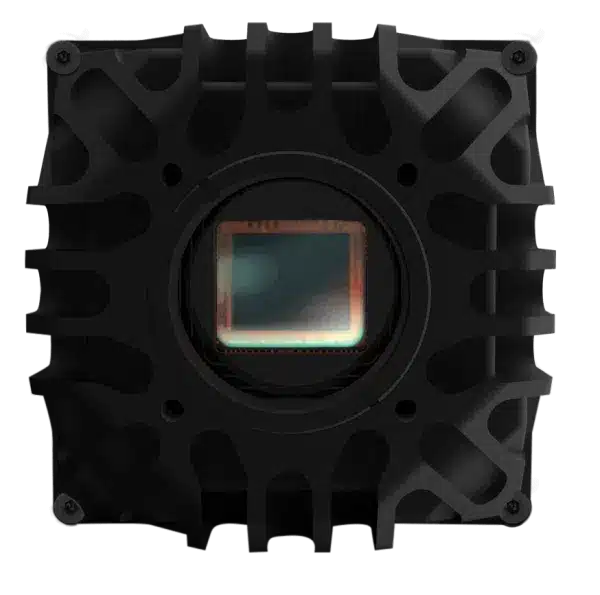
eZephir eZephir SWIR camera 900–2500 nm USB 3.0 / Camera Link 640 x 512 px / 15 µm TE cooled 240 fps Extended SWIR to 2500 nm with deep TE cooling. Best choice for spectroscopy, astronomy, and applications requiring wavelengths beyond standard 1700 nm InGaAs. USB3 and Camera Link output for flexible integration.
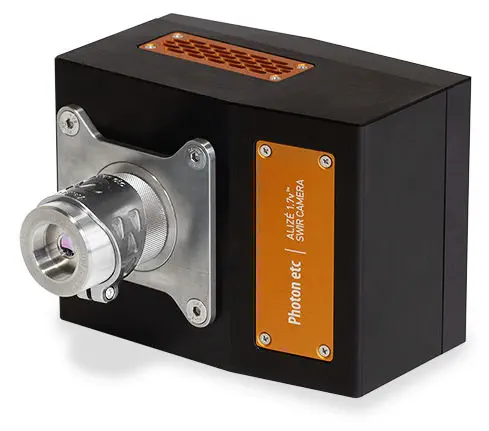
ALIZE ALIZE SWIR camera 900–1700 nm USB 3.0 / Camera Link 640 x 512 px / 15 µm TE cooled 250 fps Standard 900–1700 nm InGaAs with deep TE cooling and 250 fps frame rate. Well-suited for low-light scientific imaging, long-exposure spectroscopy-related work, and laboratory research where cooling depth matters more than extended wavelength range.
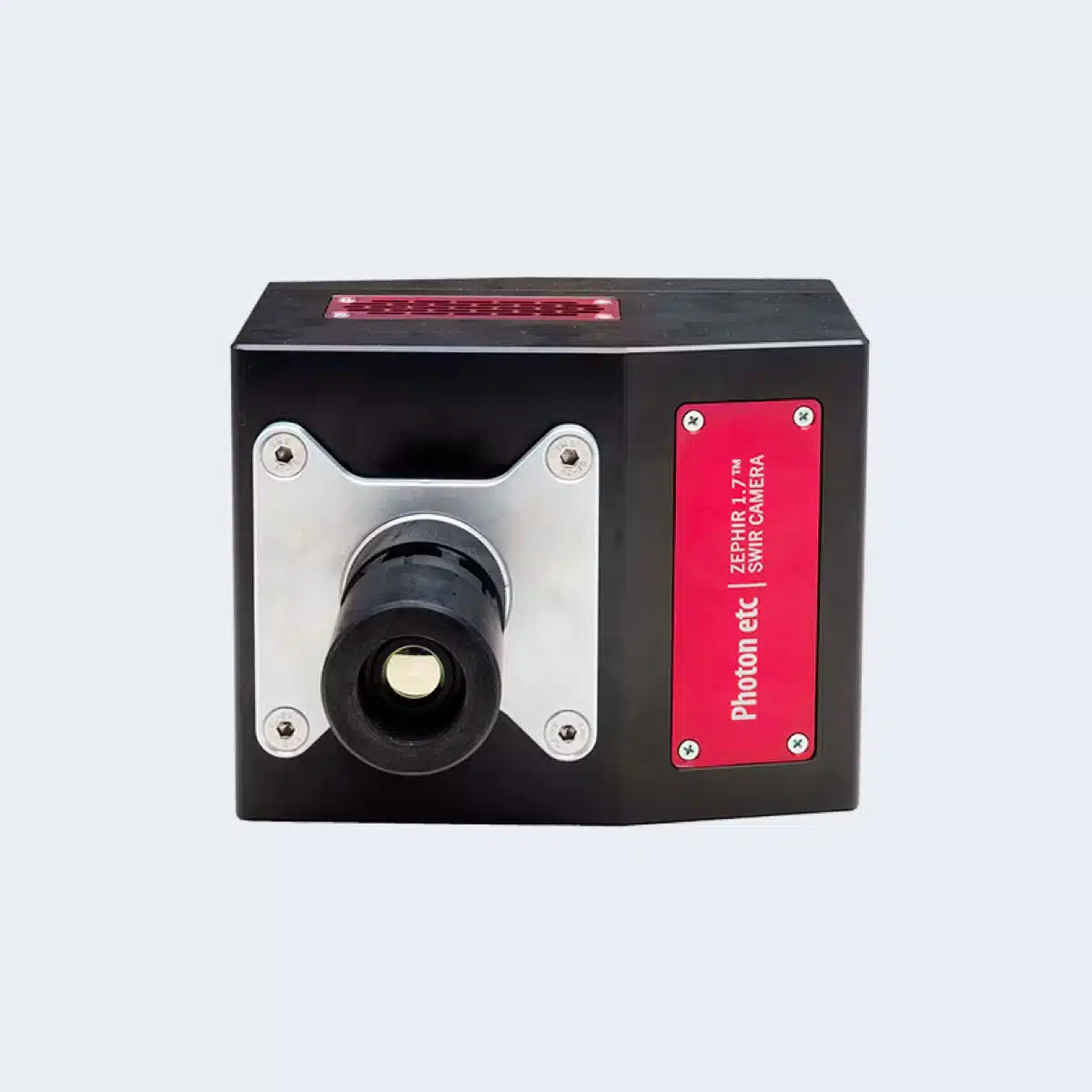
Zephir 1.7 Zephir 1.7 SWIR camera 900–1700 nm USB 3.0 / Camera Link 640 x 512 px / 15 µm TE cooled 240 fps Deeply cooled 1.7 µm cutoff InGaAs camera from Photon Etc. Suited for demanding scientific imaging, photoluminescence, and low-noise laboratory measurements where the Zephir platform's deep cooling and optical design are required.

2 Megapixel SWIR Cameras

The SenS 1920 family delivers 1920 x 1080 px resolution at 8 µm pixel pitch — the highest spatial resolution available in the Pembroke SWIR lineup. Three data port variants (Camera Link SDR26, Camera Link LSHM130, and USB 3.0) cover industrial, OEM, and laboratory integration requirements.

Camera Model Image Spectral Range Data Port Type Sensor Format Cooling Max Frame Rate Best Fit
SenS 1920M-ST SenS 1920M-ST SWIR camera 900–1700 nm Camera Link SDR26 1920 x 1080 px / 8 µm TE cooled 40 fps 2 MP SWIR via Camera Link SDR26 for high-bandwidth industrial integration. Best for semiconductor inspection lines, automated machine vision systems, and OEM instruments requiring Camera Link frame grabbers and deterministic triggering.
SenS 1920L-ST SenS 1920L-ST SWIR camera 900–1700 nm Camera Link LSHM130 1920 x 1080 px / 8 µm TE cooled 40 fps 2 MP SWIR via Camera Link LSHM130 connector. Suited for systems requiring the LSHM130 form factor for compact integration or specific frame grabber compatibility in semiconductor and industrial inspection setups.
SenS 1920V-ST SenS 1920V-ST SWIR camera 900–1700 nm USB 3.0 1920 x 1080 px / 8 µm TE cooled 40 fps 2 MP SWIR via USB 3.0 for cable-simple laboratory and research integration. Best choice when Camera Link infrastructure is not available — connects directly to a PC for microscopy, material analysis, and high-resolution SWIR imaging without a frame grabber.

1.3 Megapixel SWIR Cameras

The SenS 1280 family provides 1280 x 1024 px resolution at 10 µm pixel pitch with six data port options — USB3, Camera Link SDR26, Camera Link LSHM130, CoaXPress, HD-SDI, and an extended-range variant. This breadth makes the SenS 1280 the most integration-flexible high-resolution SWIR camera in the Pembroke lineup.

Camera Model Image Spectral Range Data Port Type Sensor Format Cooling Max Frame Rate Best Fit
SenS 1280V-ST SenS 1280V-ST SWIR camera 900–1700 nm USB 3.0 1280 x 1024 px / 10 µm TE cooled 60 fps 1.3 MP SWIR via USB 3.0 at 60 fps. Best for laboratory research, university setups, and inspection systems where a direct PC connection is preferred and Camera Link infrastructure is not available.
SenS 1280M-ST SenS 1280M-ST SWIR camera 900–1700 nm Camera Link SDR26 1280 x 1024 px / 10 µm TE cooled 60 fps 1.3 MP SWIR via Camera Link SDR26 for industrial inspection and OEM integration. Suited for production lines and automated systems requiring deterministic triggering and Camera Link frame grabber compatibility.
SenS 1280M-STE SenS 1280M-STE SWIR camera 900–1700 nm Camera Link SDR26 1280 x 1024 px / 10 µm TE cooled 60 fps 1.3 MP SWIR via Camera Link SDR26 with enhanced TE cooling (STE variant). Best for applications requiring lower dark current than the standard ST — longer exposures, higher sensitivity, or thermally demanding environments.
SenS 1280C-STE SenS 1280C-STE SWIR camera 900–1700 nm CoaXPress 1280 x 1024 px / 10 µm TE cooled 60 fps 1.3 MP SWIR via CoaXPress for high-speed industrial systems requiring long coaxial cable runs and high data bandwidth. Best for factory automation and inspection lines already standardized on CoaXPress infrastructure.
SenS 1280H-STE SenS 1280H-STE SWIR camera 900–1700 nm HD-SDI 1280 x 1024 px / 10 µm TE cooled 60 fps 1.3 MP SWIR via HD-SDI for broadcast-compatible or video-infrastructure integration. Best for field deployments, defense, and inspection systems where HD-SDI cabling and monitors are already in place.
SenS 1280L-STE SenS 1280L-STE SWIR camera 900–1700 nm Camera Link LSHM130 1280 x 1024 px / 10 µm TE cooled 60 fps 1.3 MP SWIR via Camera Link LSHM130 with enhanced TE cooling. Best for OEM instruments and compact industrial systems requiring the LSHM130 connector form factor with lower noise than the standard ST variant.

TE-Cooled VGA SWIR Cameras

The WiDy SenS 640 family covers 640 x 512 px VGA SWIR imaging across the widest range of data port options in the Pembroke lineup: USB3, Camera Link SDR26, Camera Link LSHM130, GigE Vision/PoE, HD-SDI, and analog video. The HiPe SenS 640 variants extend the spectral range to 900–1800 nm for applications requiring sensitivity beyond standard 1700 nm InGaAs.

Camera Model Image Spectral Range Data Port Type Sensor Format Cooling Max Frame Rate Best Fit
WiDy SenS 640V-ST WiDy SenS 640V-ST SWIR camera 900–1700 nm USB 3.0 640 x 512 px / 15 µm TE cooled 250 fps TE-cooled VGA SWIR via USB 3.0 at 250 fps. Best for laboratory research, university setups, and machine vision evaluations where a direct PC connection is preferred without a frame grabber.
WiDy SenS 640V-STP WiDy SenS 640V-STP SWIR camera 900–1700 nm USB 3.0 640 x 512 px / 15 µm TE cooled 250 fps TE-cooled VGA SWIR via USB 3.0 with Peltier temperature control (STP variant). Best for applications requiring tighter thermal stabilization of the detector for more consistent dark current performance over time.
WiDy SenS 640M-ST WiDy SenS 640M-ST SWIR camera 900–1700 nm Camera Link SDR26 640 x 512 px / 15 µm TE cooled 250 fps TE-cooled VGA SWIR via Camera Link SDR26 for industrial machine vision and OEM integration. Best for production inspection systems requiring Camera Link frame grabbers, hardware triggering, and deterministic acquisition.
WiDy SenS 640L-ST WiDy SenS 640L-ST SWIR camera 900–1700 nm Camera Link LSHM130 640 x 512 px / 15 µm TE cooled 250 fps TE-cooled VGA SWIR via Camera Link LSHM130 for compact OEM instruments and systems requiring the LSHM130 connector form factor with Camera Link performance.
WiDy SenS 640M-STE WiDy SenS 640M-STE SWIR camera 900–1700 nm Camera Link SDR26 640 x 512 px / 15 µm TE cooled 250 fps TE-cooled VGA SWIR via Camera Link SDR26 with enhanced TE cooling (STE). Best for industrial inspection requiring lower dark current than the standard ST — longer integration times, higher sensitivity, or thermally demanding environments.
WiDy SenS 640M-STE2 WiDy SenS 640M-STE2 SWIR camera 900–1700 nm Camera Link SDR26 640 x 512 px / 15 µm TE cooled 250 fps TE-cooled VGA SWIR via Camera Link SDR26 with second-generation enhanced cooling (STE2). Best for the most demanding industrial and scientific applications requiring the lowest achievable dark current in the WiDy SenS Camera Link family.
WiDy SenS 640L-STE2 WiDy SenS 640L-STE2 SWIR camera 900–1700 nm Camera Link LSHM130 640 x 512 px / 15 µm TE cooled 250 fps TE-cooled VGA SWIR via Camera Link LSHM130 with second-generation enhanced cooling. Best for compact OEM instruments requiring the LSHM130 form factor and the lowest dark current available in the LSHM130 connector family.
WiDy SenS 640M-STP WiDy SenS 640M-STP SWIR camera 900–1700 nm Camera Link SDR26 640 x 512 px / 15 µm TE cooled 250 fps TE-cooled VGA SWIR via Camera Link SDR26 with Peltier temperature control (STP). Best for industrial systems requiring tighter detector temperature stabilization for consistent, repeatable dark current performance across varying ambient conditions.
WiDy SenS 640M-STPE WiDy SenS 640M-STPE SWIR camera 900–1700 nm Camera Link SDR26 640 x 512 px / 15 µm TE cooled 250 fps TE-cooled VGA SWIR via Camera Link SDR26 with Peltier temperature control and enhanced cooling (STPE). Best for the most thermally demanding industrial OEM applications requiring both tight temperature stabilization and enhanced cooling depth.
WiDy SenS 640G-STE WiDy SenS 640G-STE SWIR camera 900–1700 nm GigE Vision / PoE 640 x 512 px / 15 µm TE cooled 250 fps TE-cooled VGA SWIR via GigE Vision with Power over Ethernet. Best for networked machine vision systems, long cable run installations, and multi-camera setups where GigE Vision standardization and PoE simplify cabling and integration.
WiDy SenS 640G-STE2 WiDy SenS 640G-STE2 SWIR camera 900–1700 nm GigE Vision / PoE 640 x 512 px / 15 µm TE cooled 250 fps TE-cooled VGA SWIR via GigE Vision/PoE with second-generation enhanced cooling. Best for networked industrial systems requiring the lowest dark current available in the GigE Vision SenS family — long exposures over Ethernet.
WiDy SenS 640A-STE-PAL WiDy SenS 640A-STE-PAL SWIR camera 900–1700 nm Analog Video (PAL) 640 x 512 px / 15 µm TE cooled 60 fps TE-cooled VGA SWIR with PAL analog video output. Best for field deployments, legacy inspection systems, and applications in PAL-standard regions (Europe, Asia) where analog video infrastructure is already in place.
WiDy SenS 640A-STE-NTSC WiDy SenS 640A-STE-NTSC SWIR camera 900–1700 nm Analog Video (NTSC) 640 x 512 px / 15 µm TE cooled 60 fps TE-cooled VGA SWIR with NTSC analog video output. Best for field deployments and legacy inspection systems in North America and other NTSC-standard regions where analog video monitors and recorders are already in use.
WiDy SenS 640H-STE WiDy SenS 640H-STE SWIR camera 900–1700 nm HD-SDI 640 x 512 px / 15 µm TE cooled 250 fps TE-cooled VGA SWIR via HD-SDI at 250 fps. Best for broadcast-compatible integration, defense, and field inspection systems where HD-SDI cabling, monitors, and recorders are the established infrastructure.
HiPe SenS 640V-ST HiPe SenS 640V-ST SWIR camera 900–1800 nm USB 3.0 640 x 512 px / 15 µm TE cooled 250 fps Extended-range VGA SWIR to 1800 nm via USB 3.0. Best for applications requiring sensitivity beyond standard 1700 nm InGaAs — including certain moisture detection bands, material sorting, and research tasks — with simple USB3 connectivity.
HiPe SenS 640M-ST HiPe SenS 640M-ST SWIR camera 900–1800 nm Camera Link SDR26 640 x 512 px / 15 µm TE cooled 250 fps Extended-range VGA SWIR to 1800 nm via Camera Link SDR26. Best for industrial inspection and OEM systems requiring extended wavelength sensitivity beyond 1700 nm with Camera Link frame grabber integration and hardware triggering.

Uncooled VGA SWIR Cameras

Uncooled WiDy SWIR 640 cameras offer the most cost-effective entry point into InGaAs SWIR imaging. Without a thermoelectric cooler, these cameras are lighter, more compact, and simpler to integrate than cooled models — making them well-suited for machine vision, industrial inspection, laboratory evaluation, and OEM applications where ambient-temperature operation is acceptable.

Camera Model Image Spectral Range Data Port Type Sensor Format Cooling Max Frame Rate Best Fit
WiDy SWIR 640V-S WiDy SWIR 640V-S SWIR camera 900–1700 nm USB 3.0 640 x 512 px / 15 µm Uncooled 100 fps Entry-level uncooled VGA SWIR via USB 3.0. Best for laboratory evaluation, university research, and machine vision prototyping where cost and simplicity take priority over low-noise performance.
WiDy SWIR 640G-SE WiDy SWIR 640G-SE SWIR camera 900–1700 nm GigE Vision / PoE 640 x 512 px / 15 µm Uncooled 100 fps Uncooled VGA SWIR via GigE Vision with Power over Ethernet. Best for networked machine vision systems and multi-camera setups where long cable runs, PoE power delivery, and GigE Vision standardization simplify installation.
WiDy SWIR 640M-SE WiDy SWIR 640M-SE SWIR camera 900–1700 nm Camera Link SDR26 640 x 512 px / 15 µm Uncooled 100 fps Uncooled VGA SWIR via Camera Link SDR26. Best for industrial OEM integration and production inspection systems where Camera Link frame grabbers are already in use and cooling is not required by the application.
WiDy SWIR 640A-SE-PAL WiDy SWIR 640A-SE-PAL SWIR camera 900–1700 nm Analog Video (PAL) 640 x 512 px / 15 µm Uncooled 100 fps Uncooled VGA SWIR with PAL analog video output. Best for the most cost-effective field deployments and legacy inspection systems in PAL-standard regions where analog video infrastructure is already in place.
WiDy SWIR 640A-SE-NTSC WiDy SWIR 640A-SE-NTSC SWIR camera 900–1700 nm Analog Video (NTSC) 640 x 512 px / 15 µm Uncooled 100 fps Uncooled VGA SWIR with NTSC analog video output. Best for cost-effective field deployments and legacy inspection systems in North America and other NTSC-standard regions where analog video monitors and recorders are already in use.

QVGA High-Speed SWIR Cameras

The WiDy SenS 320 family delivers 320 x 256 px qVGA SWIR imaging at frame rates from 1,000 fps up to 10,000 fps (HS variant). The smaller sensor format enables the high frame rates required for laser pulse capture, combustion imaging, dynamic process monitoring, and compact OEM integration where speed takes priority over spatial resolution.

Camera Model Image Spectral Range Data Port Type Sensor Format Cooling Max Frame Rate Best Fit
WiDy SenS 320V-ST WiDy SenS 320V-ST SWIR camera 900–1700 nm USB 3.0 320 x 256 px / 15 µm TE cooled 1,000 fps High-speed qVGA SWIR at 1,000 fps via USB 3.0. Best for laboratory research, laser beam profiling, and dynamic event capture where USB3 connectivity is preferred and 1,000 fps is sufficient.
WiDy SenS 320V-ST-HS WiDy SenS 320V-ST-HS SWIR camera 900–1700 nm USB 3.0 320 x 256 px / 15 µm TE cooled 10,000 fps Ultra-high-speed qVGA SWIR at 10,000 fps via USB 3.0. The fastest camera in the Pembroke SWIR lineup. Best for laser pulse capture, combustion events, ballistic imaging, and any application requiring sub-100 µs temporal resolution in the SWIR band.
WiDy SenS 320M-ST WiDy SenS 320M-ST SWIR camera 900–1700 nm Camera Link SDR26 320 x 256 px / 15 µm TE cooled 1,000 fps High-speed qVGA SWIR at 1,000 fps via Camera Link SDR26. Best for industrial OEM integration and production systems requiring Camera Link frame grabbers, hardware triggering, and deterministic high-speed acquisition.
WiDy SenS 320L-STE2 WiDy SenS 320L-STE2 SWIR camera 900–1700 nm Camera Link LSHM130 320 x 256 px / 15 µm TE cooled 1,000 fps High-speed qVGA SWIR at 1,000 fps via Camera Link LSHM130 with second-generation enhanced cooling. Best for compact OEM instruments requiring the LSHM130 form factor, high-speed acquisition, and the lowest dark current in the LSHM130 qVGA family.
WiDy SenS 320M-STE2 WiDy SenS 320M-STE2 SWIR camera 900–1700 nm Camera Link SDR26 320 x 256 px / 15 µm TE cooled 1,000 fps High-speed qVGA SWIR at 1,000 fps via Camera Link SDR26 with second-generation enhanced cooling. Best for industrial systems requiring the lowest dark current in the Camera Link SDR26 qVGA family — high-speed acquisition with improved sensitivity.
WiDy SenS 320G-STE2 WiDy SenS 320G-STE2 SWIR camera 900–1700 nm GigE Vision / PoE 320 x 256 px / 15 µm TE cooled 1,000 fps High-speed qVGA SWIR at 1,000 fps via GigE Vision with PoE and second-generation enhanced cooling. Best for networked high-speed inspection systems where GigE Vision standardization, PoE power delivery, and improved cooling depth are all required.

Line Scan SWIR Cameras

Line scan SWIR cameras image one line at a time as the target moves past the sensor, building a 2D image from sequential line acquisitions. This approach is well-suited for continuous web inspection, conveyor-based sorting, and any process where the material moves at a controlled speed past a fixed camera.

Camera Model Image Spectral Range Data Port Type Sensor Format Cooling Max Frame Rate Best Fit
LiSA LiSA SWIR camera 900–1700 nm Camera Link SDR26 2048 x 1 px / 7.5 µm TE cooled 60 kHz 2048-pixel TE-cooled InGaAs line scan camera at 60 kHz line rate and 7.5 µm pixel pitch. Best for continuous web inspection, conveyor-based material sorting, food and agricultural inspection, and any high-throughput process requiring SWIR line scan imaging at production speeds.

SWIR Camera Applications

SWIR imaging is valuable when visible cameras cannot provide enough contrast, transmission, or wavelength-specific information. InGaAs sensors detect reflected and emitted SWIR radiation that silicon-based cameras are blind to — enabling inspection, measurement, and analysis tasks that are not possible in the visible spectrum.

Semiconductor Inspection

Silicon is transparent to SWIR wavelengths above approximately 1100 nm, allowing InGaAs cameras to image through silicon wafers, inspect bonded die interfaces, detect voids and delamination in packages, and reveal subsurface features invisible to visible-light cameras. Used for wafer inspection, through-silicon via (TSV) imaging, and flip-chip bond inspection.

Learn more ->

Laser Beam Profiling

NIR and SWIR lasers operating between 900 and 1700 nm — including Nd:YAG, Er:YAG, fiber lasers, and telecom-band sources — are invisible to silicon cameras but fall squarely within the InGaAs response range. SWIR cameras image beam shape, mode structure, and alignment directly without upconversion or phosphor cards.

Learn more ->

Machine Vision

SWIR wavelengths penetrate certain plastics, coatings, and packaging materials that are opaque in the visible spectrum, enabling contamination detection, fill-level inspection, and sorting tasks that visible cameras cannot perform. Water absorption bands near 1450 nm and 1940 nm provide strong contrast for moisture-based sorting and quality control.

Learn more ->

Moisture Detection

Water absorbs SWIR light strongly at approximately 1450 nm and 1940 nm, creating high contrast between wet and dry regions that is invisible to visible cameras. SWIR moisture imaging is used for paper and board moisture mapping, food quality inspection, agricultural sorting, and coating uniformity verification.

Learn more ->

Scientific Research

InGaAs SWIR cameras support photoluminescence imaging, time-resolved spectroscopy, low-light astronomical imaging, material bandgap characterization, and laboratory experiments requiring sensitivity in the 900–2500 nm range. Deeply cooled models reduce dark current to levels required for long-exposure and low-flux scientific measurements.

Learn more ->

SWIR Hyperspectral Imaging

When broadband SWIR imaging provides insufficient material discrimination, hyperspectral SWIR systems add spectral resolution across the 900–1700 nm range. This enables chemical mapping, mineral identification, polymer sorting, and agricultural analysis by capturing a full spectral signature at each pixel rather than a single broadband intensity value.

Learn more ->

SWIR Camera Resources and Technical Guides

Selecting and integrating a SWIR camera requires understanding detector physics, optical design, wavelength response, illumination, calibration, and image processing. Pembroke Instruments provides technical guides to help engineers and researchers evaluate InGaAs SWIR imaging systems and plan successful camera integrations.

The Physics of SWIR Imaging

Review how shortwave infrared light interacts with materials, why silicon becomes transparent above approximately 1100 nm, how InGaAs detectors work, and what determines sensitivity, noise, and dynamic range in a SWIR imaging system.

Why Use SWIR Cameras?

Explore practical SWIR imaging applications including semiconductor inspection, laser beam profiling, moisture detection, sorting, machine vision, scientific imaging, and materials analysis — with examples of what SWIR reveals that visible cameras cannot.

SWIR Optics and System Design

Learn about lens selection for SWIR wavelengths, anti-reflection coatings, working distance, field of view, illumination geometry, bandpass filters, and other optical design factors that determine SWIR camera system performance.

SWIR Integration, Calibration, and Image Processing

Find guidance for camera integration, non-uniformity correction (NUC), flat-field calibration, triggering, SDK selection, image correction workflows, and processing considerations for industrial and laboratory SWIR imaging systems.

These SWIR resources are intended to help define camera requirements, compare camera options, and support deployment in research, machine vision, semiconductor, laser, and industrial inspection applications.

Request SWIR Camera Selection Support

Pembroke Instruments provides pre-sales and post-sales technical support for SWIR camera selection, lens matching, field-of-view planning, lighting, software, SDK integration, and system configuration. Share your wavelength range, field of view, working distance, target size, speed requirement, and data port type preference so we can recommend the best-fit SWIR imaging system.

NIR / SWIR Camera Software Options

Pembroke Instruments supplies NIR and SWIR camera systems with software options for live image viewing, camera setup, image acquisition, machine vision integration, scientific analysis, OEM development, and hyperspectral imaging workflows. The best software choice depends on the camera model, data port type, operating system, acquisition speed, triggering requirements, and whether the system is used for laboratory research, semiconductor inspection, microscopy, machine vision, or embedded OEM integration.

Native Camera Control Software

Vendor camera-control software provides a practical starting point for camera setup, live viewing, exposure control, gain control, triggering, image capture, and video recording. This is typically the fastest way to evaluate a SWIR camera and confirm image quality before moving into custom software or machine vision integration.

  • Live image display and acquisition
  • Exposure, gain, frame rate, and ROI control
  • Trigger setup and camera configuration
  • Image saving, sequence capture, and video recording
  • Flat-field and non-uniformity correction workflows where supported

NIT Vision and NIT SDK

Many New Imaging Technologies (NIT) SWIR cameras, including SenS and WiDy camera families, are supported by NIT camera software and development tools. These tools are useful for both interactive camera operation and software integration in engineering, research, and OEM systems.

  • Camera discovery and parameter control
  • Image streaming and triggered acquisition
  • Temperature and camera-status monitoring where available
  • SDK support for custom acquisition and automation
  • Integration options for industrial and laboratory workflows

SDK / API Development

For custom software, OEM instruments, and automated inspection systems, SDKs provide direct access to camera control, image buffers, trigger events, and acquisition parameters. SDK-based integration is often preferred when the SWIR camera must operate inside a larger instrument, production system, or automated test platform.

  • C/C++, C#, Python, MATLAB, or LabVIEW options depending on camera and data port type
  • Custom acquisition, triggering, and synchronization
  • Multi-camera and machine-control integration
  • Automated saving, processing, and analysis workflows

GigE Vision and GenICam Tools

GigE Vision and GenICam compatibility simplifies integration with third-party machine vision software and standardized camera-control environments. This is especially important for industrial systems requiring long cable lengths, networked cameras, repeatable setup, and compatibility with existing machine vision tools.

  • Standardized camera discovery and feature control
  • Network-based image streaming for GigE Vision models
  • Compatibility with GenICam / GenTL workflows where supported
  • Useful for debugging camera features, exposure, triggering, and data transfer

Third-Party Machine Vision Software

Industrial SWIR inspection systems may use third-party machine vision platforms for measurement, defect detection, pattern recognition, sorting, robotics, or process control. Compatibility depends on the camera data port type, frame grabber, driver, and software environment.

  • MVTec HALCON for advanced industrial image processing
  • Cognex VisionPro for production inspection workflows
  • NI LabVIEW Vision for laboratory automation and instrument control
  • MATLAB Image Acquisition Toolbox for research and algorithm development

Scientific Imaging and Analysis

For research, microscopy, spectroscopy-related imaging, and algorithm development, SWIR image data can be exported for analysis in scientific software. TIFF image sequences and raw data workflows are commonly used when quantitative post-processing is required.

  • ImageJ / Fiji for scientific image processing
  • MATLAB or Python for custom analysis
  • Flat-field, background, and shade correction workflows
  • Data export for reporting, publication, or algorithm validation

Software selection factors to confirm before choosing a SWIR camera

  • Data port type: USB3, GigE Vision, Camera Link, CoaXPress, HD-SDI, or analog output may require different drivers, frame grabbers, or acquisition tools.
  • Operating system: confirm Windows, Linux, or other OS support before selecting a camera for OEM or production use.
  • SDK language support: verify whether your project requires C/C++, C#, Python, MATLAB, LabVIEW, or another development environment.
  • Triggering and synchronization: confirm external trigger, encoder, strobe, multi-camera, and hardware synchronization requirements early.
  • Recording bandwidth: high-resolution and high-speed SWIR cameras may require optimized storage, frame grabbers, or buffered acquisition.
  • Analysis workflow: decide whether the application needs live inspection, saved image sequences, quantitative image analysis, hyperspectral processing, or automated reporting.

Broadband SWIR Camera Software

For most area-scan SWIR cameras, software selection begins with the vendor GUI for setup and image capture, then moves to SDK or third-party software when the camera must be integrated into a larger system. This approach works well for semiconductor inspection, laser beam profiling, microscopy, materials analysis, and machine vision.

Hyperspectral SWIR Software

SWIR hyperspectral imaging systems require additional software capabilities for spectral cube acquisition, wavelength calibration, reflectance correction, region-of-interest analysis, chemical mapping, and false-color visualization. These workflows are different from standard broadband SWIR camera acquisition.

Learn about SWIR hyperspectral imaging ->

Need help selecting SWIR camera software? Pembroke Instruments can help match the camera, data port type, lens, illumination, software, SDK, and processing workflow to your application requirements.