
.
Scientific CCD Camera Selection Help

Need Help Selecting the Right Scientific CCD Camera?

Pembroke Instruments helps scientists, engineers, and OEM teams choose low-noise CCD cameras for spectroscopy, fluorescence, UV/VIS/NIR imaging, X-ray/EUV/VUV detection, and in-vacuum experiments.

Tell us your wavelength range, exposure time, sensor format, cooling requirement, vacuum requirements, and whether the application is imaging, spectroscopy, or OEM integration. We will help match the best ELSE, ALEX, LOTTE, CCD, or sCMOS camera option to your application.

Low-Light ImagingDeep-cooled CCD options for weak signals
SpectroscopyUV, visible, NIR, XUV, EUV and X-ray readout
Vacuum SystemsLOTTE in-vacuum compatible CCD platforms
OEM SupportInterface, software, and integration guidance
  • Compare CCD vs sCMOS for your measurement
  • Select imaging or spectroscopy detector format
  • Confirm wavelength range and sensor coating needs
  • Review cooling, read noise, and exposure time requirements
  • Determine whether in-vacuum operation is required
  • Match camera interface, software, and budget constraints

Talk to a CCD Camera Engineer

Use this form to describe your application. A Pembroke Instruments specialist can recommend the best-fit CCD camera, sensor format, cooling level, wavelength response, and integration approach.

Helpful details to include: imaging or spectroscopy, wavelength range, exposure time, target signal level, sensor size, vacuum needs, and required interface.

Need Help Selecting a CCD Camera-Talk to an Engineer

Send in your requests for information

Please describe your application and if you need pricing and/or technical information
Start With the Measurement

Which CCD Camera Fits Your Application?

The right camera depends first on what you are trying to measure. Use the application paths below to narrow the likely camera family, then request a recommendation before finalizing detector format, coating, cooling, and interface.

UV/VIS/NIR Imaging

For low-light laboratory imaging, fluorescence, photoluminescence, electroluminescence, astronomy, and long-exposure measurements.

View ELSE Cameras →

Spectroscopy Readout

For Raman, fluorescence, absorption, reflectance, LIBS, XUV/EUV/VUV spectroscopy, and spectrometer detector integration.

Compare Spectroscopy CCDs →

X-Ray / EUV / VUV

For high-energy imaging and spectroscopy from approximately 0.1 to 150 nm, including beamline, HHG, and plasma diagnostic applications.

View ALEX Cameras →

In-Vacuum Detection

For chamber-based experiments where the detector must operate inside a vacuum system for X-ray, EUV, VUV, or XUV measurement.

View LOTTE Cameras →
Engineering Support Before You Buy

Why Ask Pembroke Before Choosing a CCD Camera?

Scientific CCD cameras are not one-size-fits-all. The best detector depends on wavelength range, signal strength, exposure time, cooling depth, sensor coating, vacuum compatibility, and whether the camera will be used for imaging, spectroscopy, or OEM integration.

  • CCD vs sCMOS guidance
  • Sensor format and active area review
  • Read noise and cooling discussion
  • Spectroscopy vs imaging detector matching
  • Vacuum and chamber compatibility review
  • Interface and software workflow planning

Send a Short Application Summary

Not ready for a formal quote? Use the form above and include a few details about your sample, wavelength range, target signal, exposure time, and experiment setup. We can help identify the most appropriate camera family.

Request Engineering Guidance →

Low Noise CCD Cameras for Imaging and Spectroscopy

Greateyes scientific CCD cameras are based on a flexible platform concept for imaging and spectroscopy across the X-ray, XUV, EUV, UV, visible, and NIR range. These deep-cooled CCD cameras combine highly sensitive sensors with true 18-bit electronics to support detection of weak signals, high dynamic range measurements, and quantitative analysis.

Select among different sensor formats, pixel sizes, sensor technologies, coatings, and camera platforms to match the wavelength range, field of view, spectral format, vacuum requirements, and measurement geometry of your application.

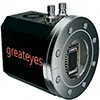
ELSE deep cooled scientific CCD camera

ELSE Series

Deep-cooled CCD cameras for UV, visible, and NIR imaging or spectroscopy between 100 and 1000 nm.

View ELSE options →
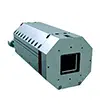
ALEX CCD camera for X-ray EUV and VUV imaging

ALEX Series

CCD cameras for high-performance X-ray, EUV, and VUV imaging and spectroscopy from 0.1 to 150 nm.

View ALEX options →
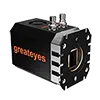
LOTTE in-vacuum compatible CCD camera

LOTTE Series

In-vacuum compatible CCD cameras for X-ray, EUV, and VUV experiments where the detector operates inside a vacuum chamber.

View LOTTE options →
Need help selecting? Send your wavelength range, sensor format, exposure time, vacuum needs, and interface requirements. Talk to Pembroke →

CCD Camera Comparison Table

Use this corrected CCD camera table to compare Greateyes ELSE, ALEX, and LOTTE scientific CCD camera platforms for imaging, spectroscopy, X-ray, EUV, VUV, UV, visible, NIR, and in-vacuum applications.

Link maintenance note: all datasheet buttons below use the April 2026 Pembroke Instruments PDF URLs from the corrected spreadsheet. This card-based layout avoids fragile table column widths and isolates image sizing so future page edits are less likely to break the layout.
ELSE-I scientific CCD camera for UV visible and NIR imaging
ELSE-IELSE Imaging

Deep-cooled CCD camera platform for UV, visible, and NIR imaging applications between approximately 100 and 1000 nm. Suitable for long-exposure scientific imaging, low-light detection, electroluminescence, photoluminescence, and laboratory imaging.

Sensor format / active area

  • 1024 x 1024, 13 µm
  • 2048 x 2052, 13.5 µm
  • 4056 x 4112, 15 µm
  • Active areas up to approximately 61 x 61 mm

Best-fit applications

Low-light imaging, UV/VIS/NIR imaging, fluorescence, astronomy, EL/PL imaging
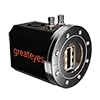
ELSE-S scientific CCD camera for UV visible and NIR spectroscopy
ELSE-SELSE Spectroscopy

Deep-cooled CCD camera platform for UV, visible, and NIR spectroscopy between approximately 100 and 1000 nm. Designed for low read noise, weak signal detection, long exposures, and spectrometer readout.

Sensor format / active area

  • 1024 x 128 spectroscopy format
  • 1024 x 256 spectroscopy format
  • 2048 x 256 and 2048 x 512 formats
  • Large-format spectroscopy options depending on configuration

Best-fit applications

Raman, fluorescence, absorption, reflectance, LIBS, spectrometer readout

ALEX-I CCD camera for X-ray EUV and VUV imaging
ALEX-IALEX Imaging

CCD camera platform for high-performance X-ray, EUV, and VUV imaging from approximately 0.1 to 150 nm. Useful for quantitative high-energy detection and laboratory or beamline imaging systems.

Sensor format / active area

  • 1024 x 1024, 13 µm
  • 2048 x 2052, 13.5 µm
  • 4056 x 4112, 15 µm
  • Large active-area options for high-energy imaging

Best-fit applications

X-ray imaging, EUV/VUV detection, beamline imaging, high-harmonic generation experiments

ALEX-S CCD camera for X-ray EUV and VUV spectroscopy
ALEX-SALEX Spectroscopy

CCD camera platform for X-ray, EUV, VUV, and XUV spectroscopy from approximately 0.1 to 150 nm. Suitable for high-energy spectrometers, plasma diagnostics, beamline instruments, and HHG systems.

Sensor format / active area

  • 1024 x 128 spectroscopy format
  • 1024 x 256 spectroscopy format
  • 2048 x 256 and 2048 x 512 formats
  • Custom sensor and coating options available

Best-fit applications

Soft X-ray spectroscopy, XUV spectroscopy, EUV/VUV spectrometers, plasma diagnostics

LOTTE-I in-vacuum scientific CCD camera
LOTTE-ILOTTE Imaging

In-vacuum compatible CCD camera for X-ray, EUV, and VUV imaging where the detector must operate inside a vacuum chamber. Designed for chamber-based experiments and high-energy imaging layouts.

Sensor format / active area

  • 1024 x 1024, 13 µm
  • 2048 x 2052, 13.5 µm
  • 4056 x 4112, 15 µm
  • Vacuum-compatible imaging configurations

Best-fit applications

Vacuum chamber imaging, soft X-ray imaging, EUV/VUV experiments, beamline instrumentation

LOTTE-S in-vacuum spectroscopy CCD camera
LOTTE-SLOTTE Spectroscopy

In-vacuum compatible CCD camera for X-ray, EUV, VUV, and XUV spectroscopy when detector placement inside the chamber is required. Suitable for vacuum spectrometers, beamlines, and chamber-based measurement systems.

Sensor format / active area

  • 1024 x 128 spectroscopy format
  • 1024 x 256 spectroscopy format
  • 2048 x 256 and 2048 x 512 formats
  • Vacuum-compatible spectroscopy configurations

Best-fit applications

In-vacuum spectroscopy, XUV spectroscopy, soft X-ray spectrometers, beamline spectrometers

CCD Camera Applications

Scientific CCD cameras are used where low noise, stable response, and high sensitivity are essential. Pembroke Instruments supports both visible/NIR scientific imaging and high-energy detection applications where CCD format, coating, vacuum compatibility, and cooling level must be matched to the experiment.

Spectroscopy

ELSE-S, ALEX-S, and LOTTE-S cameras are used for Raman spectroscopy, fluorescence spectroscopy, absorption and reflectance spectroscopy, XUV spectroscopy, soft X-ray spectroscopy, and spectrometer readout.

View spectrometers →

Low-Light Scientific Imaging

Deep cooling and low dark current support long exposure imaging, weak signal detection, fluorescence imaging, photoluminescence, electroluminescence, astronomy, and laboratory imaging.

View ELSE cameras →

X-Ray, EUV, and VUV Detection

ALEX and LOTTE platforms support high-energy imaging and spectroscopy in environments requiring 0.1-150 nm sensitivity, vacuum compatibility, and stable low-noise operation.

View high-energy applications →

Vacuum Chamber Experiments

LOTTE in-vacuum CCD cameras are designed for detector placement inside vacuum chambers for XUV, VUV, EUV, soft X-ray, and beamline-style measurement systems.

View LOTTE cameras →

OEM and Instrument Integration

Compact CCD camera platforms with GigE, USB 3.0, software, and optional SDK support can be integrated into scientific instruments and custom measurement systems.

Discuss integration →

CCD and sCMOS Selection

For applications where frame rate is more important than long-exposure stability, compare CCD cameras with scientific CMOS camera options.

Compare sCMOS cameras →

For a broader applications overview, visit CCD and sCMOS imaging applications.

Still Comparing Options?

Get a CCD Camera Recommendation Before You Specify the Detector

Share your wavelength range, imaging or spectroscopy geometry, exposure time, sensor format, cooling requirement, and any vacuum or OEM integration constraints. Pembroke Instruments can help determine whether ELSE, ALEX, LOTTE, or another camera platform is the best match.

  • Recommended camera family and configuration
  • Detector format and coating guidance
  • Cooling and read-noise considerations
  • Interface and software workflow recommendations

Request CCD Selection Help

Use the same inquiry form to send your application details directly to Pembroke Instruments.

Need Help Selecting a CCD Camera-Talk to an Engineer

Send in your requests for information

Please describe your application and if you need pricing and/or technical information

CCD Camera Resources and Related Pages

Use these product and applications pages to evaluate imaging architecture, wavelength range, detector format, and system integration options.

Published Documentation Using Greateyes CCD Cameras

The publications below provide examples of Greateyes CCD cameras used in X-ray, EUV, VUV, XUV, spectroscopy, beamline, plasma-source, and laboratory measurement applications.

Title of ArticleBrief Abstract / Verified Greateyes ReferenceArticle URL
Evaluating Palladium 4d-to-2p X-ray Emission Spectroscopy for Characterizing Catalytically Relevant Species2026 paper on palladium Lβ2 X-ray emission spectroscopy. The methods state that fluorescence was dispersed onto a 1 in. GreatEyes CCD detector with 256 × 1024 pixels.Article →
Soft X-ray imaging with coherence tomography in the water window2026 soft X-ray coherence-tomography paper using a Greateyes detector for water-window soft X-ray imaging/spectroscopy.Article →
Transient domain boundary drives ultrafast magnetisation reversal2025 Nature Communications paper on ultrafast soft X-ray magnetisation measurements using an in-vacuum CCD camera, model Greateyes GE 2048 512 BI.Article →
Observation of distorted tilted conical phase at the surface of a bulk chiral magnet with resonant elastic x-ray scattering2025 resonant elastic X-ray scattering study identifying a 4k CCD detector from GreatEyes GmbH.Article →
Ultrafast Mapping of Electronic and Nuclear Structure in the Photo Dissociation of Nitrogen Dioxide2024 ultrafast soft X-ray spectroscopy paper recording the soft X-ray spectrum with a Greateyes CCD camera.Article →
Soft X-ray wavefront sensing at an ellipsoidal mirror shell2024 Journal of Synchrotron Radiation article listing a greateyes ALEX-s 2048 × 515 BI UV1 CCD camera.Article →
PINK: a tender X-ray beamline for X-ray emission spectroscopy2024 beamline paper describing a windowless GreatEyes CCD detector mounted on the spectrometer.Article →
Testing quantum electrodynamics in extreme fields using helium-like uranium2024 high-field QED/X-ray spectroscopy paper using a Great Eyes 2048 2048 BI X-ray CCD camera under vacuum.Article →
Laser-induced XUV spectroscopy (LIXS): From fundamentals to application for high-precision LIBS2023 analytical-spectroscopy paper identifying a back-illuminated X-ray CCD detector from Greateyes.Article →
Atom Probe Tomography Using an Extreme Ultraviolet Trigger Pulse2023 atom-probe paper using a Greateyes ALEX-s 2k512 BI CCD camera in the imaging spectrometer.Article →
Extreme ultraviolet broadband imaging spectrometer using reflection zone plates2023 Optics Letters paper describing a back-illuminated Greateyes GE2048 512BI UV1 CCD.Article →
Laboratory-Based Correlative Soft X-ray and Fluorescence Microscopy2023 microscopy paper stating that an in-vacuum CCD camera from greateyes was used to record the image.Article →
Probing electron and hole colocalization by resonant four-wave mixing spectroscopy in the extreme ultraviolet2022 Science Advances paper identifying a back-illuminated CCD camera, Greateyes model GE-VAC 2048 2048.Article →
Highly efficient soft x-ray spectrometer for transient absorption spectroscopy with broadband table-top high harmonic sources2021 spectrometer paper using a two-dimensional CCD detector, Greateyes GE 2048 512 BI UV1.Article →
Still not sure which CCD camera you need? Send Pembroke Instruments your wavelength range, target signal level, exposure time, sensor format, cooling requirement, and vacuum/interface needs. Get a CCD camera recommendation →