
Thermal Imaging Applications
Thermal imaging systems help engineers, maintenance teams, and researchers detect heat patterns, hot spots, and process deviations that are impossible to see with visible cameras. This unified applications section highlights five of the most valuable thermal imaging use cases for industrial and technical users.
Each application block includes a representative image and best-fit product links so visitors can move directly from application interest to the most relevant thermal imaging system.
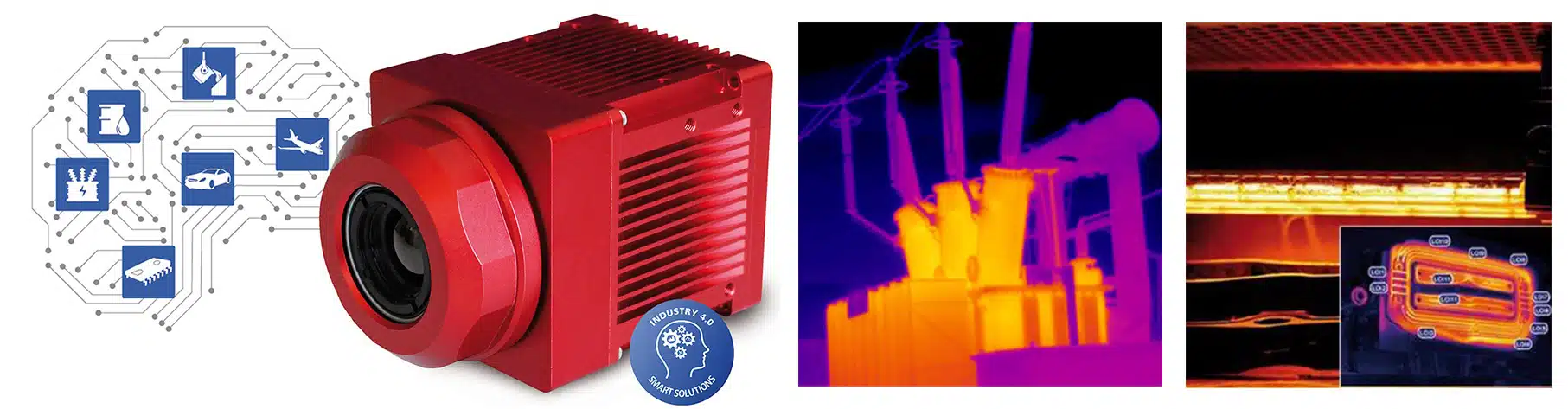
Predictive Maintenance
Find overheating motors, bearings, electrical connections, and process equipment before unplanned failures occur.
Thermal imaging is one of the most effective tools for predictive maintenance because temperature anomalies often appear before visible damage or catastrophic failure. For continuous monitoring and automated alarms, fixed-mount IRSX thermal cameras are especially well suited to plant and factory environments.
- Electrical panel hot-spot detection
- Motor, pump, and bearing monitoring
- Conveyor and rotating equipment inspection
- HVAC and utility system maintenance
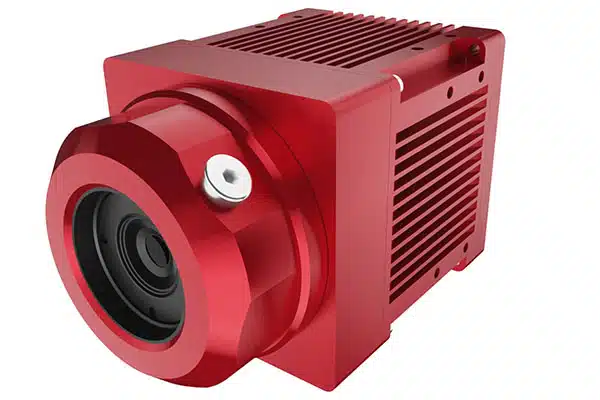
Process Monitoring and Quality Control
Verify temperature uniformity, thermal gradients, and pass/fail conditions directly on the production line.
In manufacturing processes that involve heating, cooling, bonding, curing, extrusion, or thermal treatment, thermal imaging provides full-field temperature data in real time. IRSX cameras with SmartApp support automated decision-making, alarms, and connectivity to factory systems, making them a strong fit for Industry 4.0 process control.
- Plastic, glass, and composite processing
- Thermal bonding, sealing, and welding
- Furnace, oven, and heat-treatment monitoring
- Automated pass/fail temperature inspection
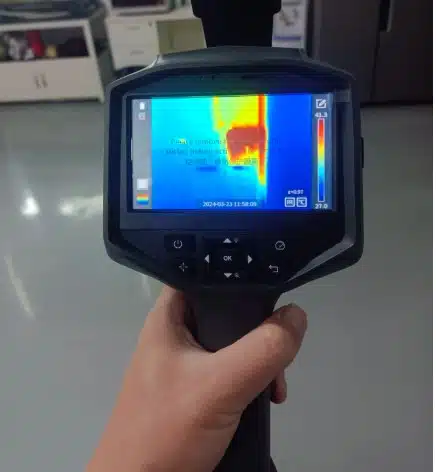
Building and Energy Inspection
Locate heat loss, air leaks, insulation defects, and hidden moisture without destructive testing.
Thermal imaging is highly effective for building diagnostics because it reveals heat flow patterns that are invisible to the eye. Handheld thermal cameras are often the most practical choice for mobile inspections, while fixed systems can be used where repeatable monitoring is required.
- Insulation and envelope inspection
- Roof and moisture problem detection
- Ductwork and pipe heat-loss surveys
- Commercial and residential energy audits
Fire and Safety Monitoring
Detect abnormal heat build-up early and trigger alarms before visible signs of failure or fire appear.
Thermal cameras help identify rising temperatures in electrical systems, battery installations, process lines, and high-risk industrial areas. Because IRSX cameras can run inspections and alarms without a separate PC, they are especially valuable for continuous safety monitoring and automated response workflows.
- Battery storage and thermal runaway monitoring
- Warehouse and process-area fire prevention
- Electrical hot-spot safety monitoring
- Automated thermal threshold alarms
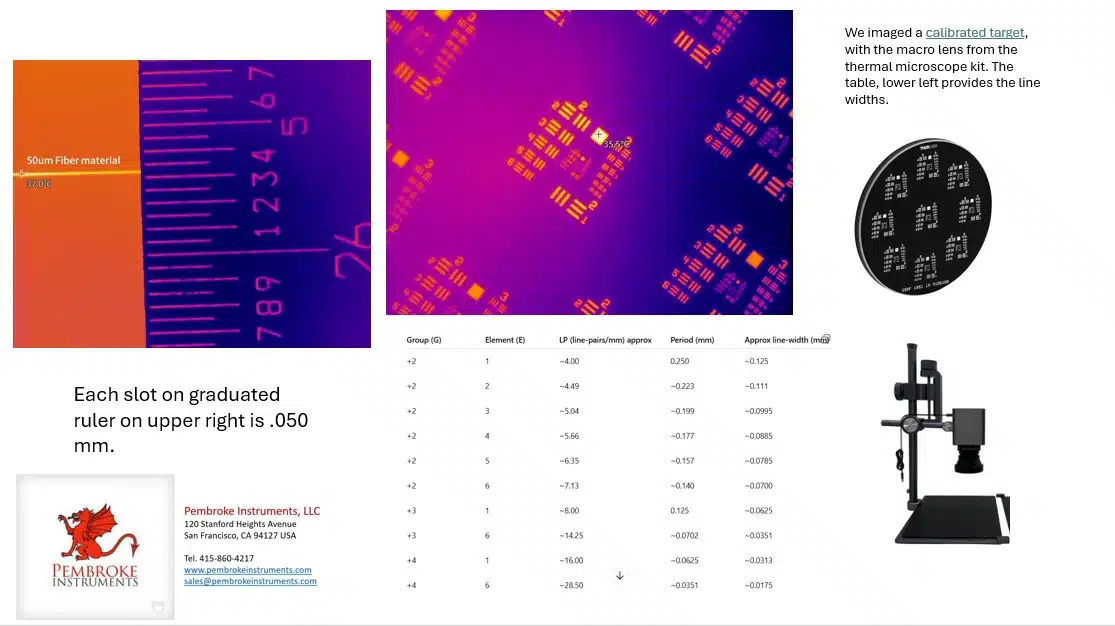
Electronics and R&D Diagnostics
Analyze PCB hot spots, semiconductor devices, and small thermal features that require close-up thermal measurement.
For electronics debugging, semiconductor work, and laboratory investigations, thermal microscopy provides the spatial detail needed to isolate small hot spots and failure points. Pembroke's thermal microscope platform is positioned specifically for non-destructive testing of ICs, PCBs, and related electronics applications.
- PCB failure analysis and debug
- Power electronics hot-spot detection
- Semiconductor and packaging diagnostics
- Laboratory thermal R&D measurements