NIT SenS 1920 Full HD SWIR Camera

SenS 1920 2 Megapixel InGaAs SWIR Camera

The SenS 1920 is a high-resolution InGaAs SWIR camera designed for semiconductor inspection, wafer and solar cell inspection, microscopy, machine vision, defense and security imaging, laser-related imaging, and scientific research. The camera combines a 1920 × 1080 Full HD sensor format, 8 µm pixel pitch, 900-1700 nm SWIR response, low read noise, and multiple interface options for laboratory, machine vision, and OEM integration.

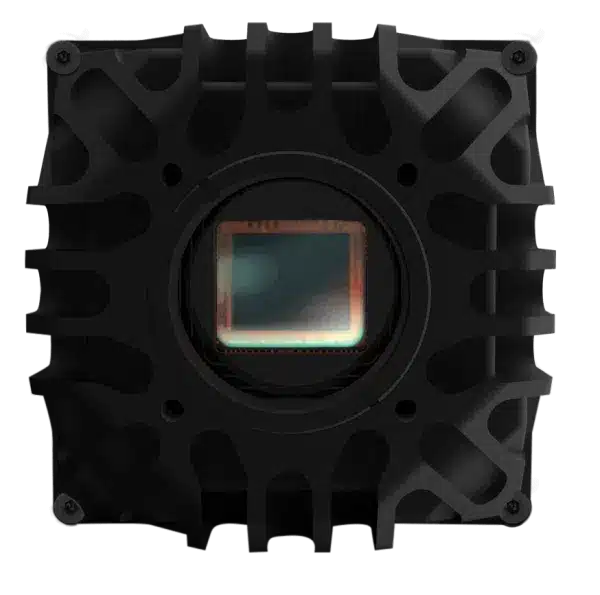
SenS 1280 swir camera front view

Full HD 2 MP InGaAs SWIR camera for high-resolution inspection and demanding imaging applications.

Full HD SWIR Imaging

The SenS 1920 provides a 1920 × 1080 sensor format for applications requiring more field coverage, finer spatial detail, and improved inspection capability compared with VGA-format SWIR cameras.

Low-Noise InGaAs Sensor

The camera uses NIT’s in-house designed NSC2101 InGaAs focal plane array with high sensitivity and typical read-out noise around 25 electrons for demanding SWIR imaging tasks.

Multiple Interfaces

SenS 1920 configurations are available with USB3.0, Camera Link, HD-SDI, and CoaXPress interface options, supporting laboratory imaging, machine vision, and OEM integration workflows.

SenS 1920 Overview

The SenS 1920 SWIR camera delivers high image definition and low-noise performance for applications that need both detailed spatial resolution and high-quality short-wave infrared image data. Its Full HD 1920 × 1080 format is useful for semiconductor inspection, wafer inspection, solar cell panel inspection, microscopy, machine vision, surveillance, and research imaging where VGA SWIR resolution is not sufficient.

The camera operates over the 900-1700 nm SWIR wavelength range and uses an 8 µm pixel pitch InGaAs sensor. The high-resolution format provides a wider field of view or more inspection detail depending on the selected lens, working distance, and system geometry.

  • 1920 × 1080 Full HD SWIR resolution
  • 2 megapixel InGaAs sensor format
  • 8 µm pixel pitch
  • 900-1700 nm short-wave infrared response
  • Typical read-out noise around 25 e-
  • Dynamic range approximately 64 dB
  • Full-frame frame rate greater than 40 Hz; higher rates possible with sub-windowing
  • USB3.0, Camera Link, HD-SDI, and CoaXPress interface options
  • GenICam-compatible integration options depending on configuration
  • NITVision GUI and SDK support for USB configurations

Available SenS 1920 Models

The SenS 1920 family can be configured with different data interface options depending on the system architecture. Pembroke Instruments can help confirm the right interface, cable, frame grabber, software, and integration approach.

Model Interface Typical Use Notes
SenS 1920V-ST USB 3.0 Laboratory imaging, R&D, microscope imaging, and PC-based acquisition Good choice when direct USB acquisition and NITVision / SDK workflow are preferred.
SenS 1920M-ST Camera Link SDR26 Frame-grabber machine vision, instruments, and OEM integration Useful for deterministic acquisition and Camera Link system architectures.
SenS 1920L-ST Camera Link-LSHM130 High-performance Camera Link integration Use where the LSHM130 Camera Link connector format is required.
SenS 1920H-ST HD-SDI Video-based monitoring and display workflows Appropriate when an HD-SDI video output workflow is preferred.
SenS 1920C-ST CoaXPress High-bandwidth machine vision and OEM systems Appropriate for CoaXPress-based acquisition architectures.

SenS 1920 Technical Specifications

Camera family SenS 1920
Sensor NSC2101T-SI
Detector material InGaAs
Resolution 1920 × 1080 pixels, approximately 2 megapixels
Pixel pitch 8 µm
Spectral response 0.9 to 1.7 µm / 900-1700 nm
Response modes Linear CTIA low gain and high gain
Operating modes ITR, CDS, ROI
Quantum efficiency >80% in low-gain mode
Read-out noise Typical 25 e-
Dynamic range Approximately 64 dB
Frame rate >40 Hz full frame in legacy page summary; specifications table lists >60 Hz full frame
Partial reading mode ROI and selective line scanning
Interface options USB3.0, Camera Link, HD-SDI, and CoaXPress configurations
Software NITVision GUI
SDKs for USB x86-64 and Arm64; C++, C#, and Python support
Dimensions 58 × 58 × 70 mm
Weight <400 g
Lens mount Native C-mount

Note: The legacy page lists both >40 Hz and >60 Hz full-frame frame rate statements. This rebuilt page preserves both references in the specifications note so the final value can be confirmed against the most current NIT datasheet if needed.

Why Choose the SenS 1920?

Software, SDK, and Interface Options

Pembroke Instruments can help match the SenS 1920 interface and software workflow to the application. USB3.0 configurations are often selected for PC-based acquisition, laboratory imaging, microscope imaging, and R&D. Camera Link and CoaXPress configurations are used when frame grabbers, deterministic machine-vision acquisition, or OEM integration requirements are important. HD-SDI configurations are useful when video display or monitoring workflows are required.

Interface Typical Use Software / Integration Notes
USB 3.0 Laboratory imaging, microscopy, R&D, and PC-based acquisition NITVision GUI and SDK support for x86-64 and Arm64, including C++, C#, and Python support.
Camera Link Frame-grabber integration, machine vision, instruments, and OEM systems Use when Camera Link acquisition hardware and integration workflow are preferred.
HD-SDI Video monitoring and display workflows Useful when direct video-style output is required.
CoaXPress High-bandwidth machine vision and OEM integration Use for CoaXPress acquisition architectures and high-performance machine vision systems.

Need Integration Help?

Ask about interface selection, frame grabber cards, data cables, SDK support, GenICam workflows, microscope coupling, SWIR lenses, illumination, triggering, and application-specific setup.

Contact Pembroke →

Need Help Selecting a High-Resolution SWIR Camera?

Contact Pembroke Instruments to discuss sensor resolution, field of view, lens selection, interface type, software workflow, frame grabber requirements, SWIR illumination, microscope coupling, and application-specific integration requirements for the SenS 1920 camera.

SWIR Imaging Request

Send us your application details and Pembroke Instruments will help identify the appropriate SWIR camera, optics, accessories, and software configuration.

SWIR Imaging Request

Send in your requests for informaation

Please describe your application and if you need pricing and/or technical information