Semiconductor Inspection
Inspect wafers, dies, packages, and silicon-based structures using SWIR wavelengths and higher SXGA image detail.
SWIR semiconductor applications ->
SenS 1280 is a high-definition SWIR camera built around NIT's in-house designed NSC1901 InGaAs sensor. It combines 1280 × 1024 SXGA resolution, 10 µm pixels, 900-1700 nm spectral response, low read-out noise, and multiple interface options for semiconductor inspection, high-resolution microscopy, laser tracking, security and surveillance, scientific imaging, machine vision, and OEM integration.
Use this page to review main features, Compact and Smart model options, technical specifications, software tools, and related SWIR cameras and resources.
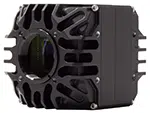
SXGA 1.3 MP InGaAs SWIR camera for high-definition inspection, microscopy, and machine vision applications.
The SenS 1280 is designed for applications that need more image detail than VGA SWIR cameras while keeping a compact, industrial camera form factor. The camera is available in Compact and Smart versions, giving engineers flexibility for laboratory imaging, OEM integration, and machine vision systems.
1280 × 1024 pixels provide higher image detail and a larger field of view than VGA-format SWIR cameras.
The 10 µm pixel pitch balances sensitivity, spatial resolution, and practical optical design for high-definition SWIR imaging.
Typical sensor noise is approximately 30e- in CTIA high-gain mode, supporting demanding low-noise SWIR imaging applications.
USB 3.0, Camera Link, HD-SDI, and CoaXPress configurations support laboratory, industrial, and OEM workflows.
The SenS 1280 is a compact and affordable high-definition SWIR camera for applications that require higher spatial resolution than standard VGA SWIR cameras. The SXGA format and low noise floor make it useful for semiconductor wafer analysis, security and surveillance, laser tracking, high-resolution SWIR microscopy, industrial inspection, materials analysis, and laboratory imaging.
The camera is based on NIT's advanced NSC1901 InGaAs sensor. It delivers 900-1700 nm SWIR response, 60 Hz full-frame operation, ROI and selective line scanning modes, and 14-bit digitization.
Use the SenS 1280 when the application needs higher image detail than VGA SWIR cameras but does not require the larger 2 MP format of the SenS 1920.
SenS 1280 cameras are available in Compact and Smart configurations. Compact versions support USB 3.0 and Camera Link workflows. Smart versions add on-board processing and GenICam-compliant integration through Camera Link, HD-SDI, and CoaXPress options.
| Version | Output Options | Key Features | Software / Integration | Best Fit |
|---|---|---|---|---|
| SenS 1280 Compact | USB 3.0, Camera Link | NUC and BPR, selective line scanning, multi ROI up to 8 vertically stacked blocks | NITVision GUI; USB SDKs for x86-64 and Arm64 using C++, C#, and Python | Laboratory imaging, microscopy, engineering development, and USB/Camera Link OEM integration |
| SenS 1280 Smart | Camera Link, HD-SDI, CoaXPress | On-board NUC and BPR, Automatic Gain Control, Automatic Integration Time, GenICam compliance | NITGenicamControlTool and GenICam-compatible workflows | Machine vision, embedded inspection, smart camera workflows, and systems needing real-time image optimization |
The specifications below summarize key information from the current SenS 1280 page source. Confirm final configuration details with Pembroke Instruments before ordering.
| Specification | SenS 1280 Value |
|---|---|
| Sensor | NSC1901T-SI |
| Sensor Material | InGaAs |
| Resolution | 1280 × 1024 pixels |
| Pixel Pitch | 10 µm |
| Spectral Response | 0.9 to 1.7 µm / 900-1700 nm |
| Dual Response | Linear CTIA low and high gain |
| Modes | ITR, CDS, ROI |
| Quantum Efficiency | >80% in low-gain mode |
| Frame Rate | 60 Hz full frame |
| Partial Reading Mode | ROI and selective line scanning |
| Exposure Time | 10 µs to 500 ms |
| Trigger | Software or hardware trigger; 1 trigger input/output; 2 programmable outputs; selectable delay |
| Power Range | 12 V |
| Dimensions | 58 × 58 × 70 mm for Compact; 58 × 58 × 64/72 mm for Smart |
| Weight | <400 g |
| Lens Mount | C-mount native |
| ADC | 14 bits |
| Operating Temperature | -40°C to +71°C |
The SenS 1280 supports CTIA high-gain and CTIA low-gain operating modes. High gain is typically used when sensitivity and low noise are most important. Low gain provides higher well capacity and dynamic range for brighter scenes.
| Operating Mode | Typical Sensor Noise | Well Capacity | Dynamic Range | Use Case |
|---|---|---|---|---|
| CTIA High Gain | typ. 30e- | >10Ke- | 52 dB | Low-light imaging, sensitivity-driven measurements, microscopy, and inspection tasks requiring low read noise |
| CTIA Low Gain | typ. 120e- | >130Ke- | 61 dB | Bright scenes, higher well capacity, and applications needing greater dynamic range |
Software choice depends on whether the camera is configured as a Compact or Smart version and which output interface is selected. Pembroke Instruments can help confirm the best software path for acquisition, triggering, camera control, and OEM integration.
| Interface | Recommended GUI / Tool | SDK / Integration Notes |
|---|---|---|
| USB 3.0 | NITVision | USB SDKs available for x86-64 and Arm64 using C++, C#, and Python |
| Camera Link - Compact | NITVision | Camera Link workflow for industrial image acquisition and frame grabber integration |
| Camera Link - Smart | NITGenicamControlTool | GenICam-compatible Smart camera workflow with on-board processing features |
| CoaXPress - Smart | NITGenicamControlTool | High-performance machine vision integration using CxP and GenICam workflows |
| HD-SDI - Smart | NITGenicamControlTool | Smart configuration with HD-SDI output for compatible video and imaging systems |
SenS 1280 is especially useful when VGA-format SWIR cameras do not provide enough spatial detail, but a compact and practical camera form factor is still required.
Inspect wafers, dies, packages, and silicon-based structures using SWIR wavelengths and higher SXGA image detail.
SWIR semiconductor applications ->Use the 1.3 MP format for higher-resolution microscope imaging, optical alignment, and sample inspection.
SWIR microscope accessories ->Image and monitor NIR/SWIR laser sources with a high-definition InGaAs camera platform.
SWIR laser applications ->Use SWIR contrast for inspection, sorting, process monitoring, and materials analysis.
Machine vision applications ->Apply high-definition SWIR imaging to security, surveillance, and low-visibility imaging scenarios.
Discuss your requirement ->Support laboratory imaging, research, materials analysis, and specialized SWIR measurement tasks.
SWIR technical resources ->Compare the SenS 1280 with other SWIR camera models and review technical guides for optics, illumination, detector physics, and application engineering.
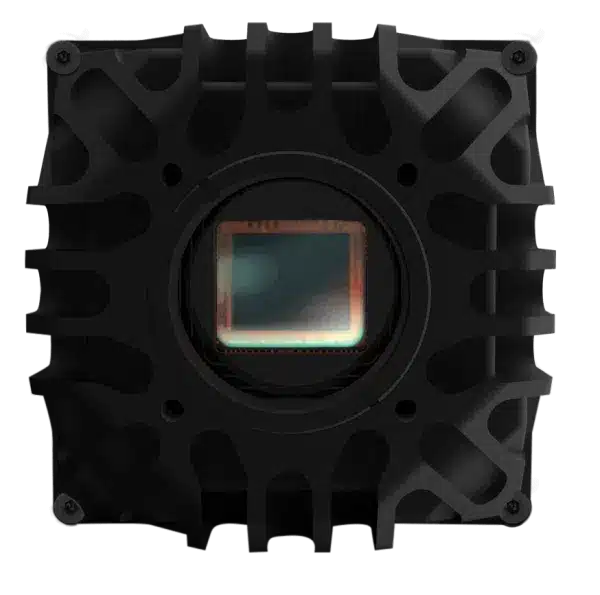
2 MP SWIR camera for applications needing more resolution than the SenS 1280.
View SenS 1920 ->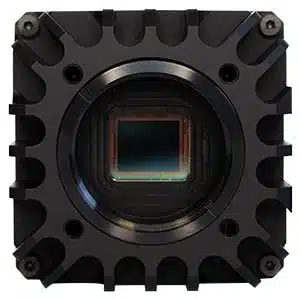
TE-cooled VGA SWIR camera family for high-speed and compact integration.
View SenS 640V-ST ->
Long-exposure SWIR camera for low-light imaging and extended exposure applications.
View HiPe SenS ->
Cost-effective uncooled VGA SWIR cameras for machine vision and laboratory imaging.
View Uncooled SWIR ->Pembroke Instruments can help confirm the correct SWIR camera model, interface, lens, illumination, software, frame grabber, and integration approach for your application. Send your working distance, field of view, wavelength range, sample type, required frame rate, triggering needs, and software environment for a practical recommendation.
Compare SenS 1280 against SenS 1920, SenS 640, HiPe SenS, and uncooled WiDy SWIR cameras.
Match lenses, microscope adapters, filters, and SWIR illumination to the field of view and working distance.
Review NITVision, NITGenicamControlTool, SDK, triggering, and data acquisition options.