
SenS 640V-ST
VGA TE-cooled SWIR camera family for higher spatial resolution than the qVGA SenS 320.
View SenS 640V-ST ->
SenS 320V-ST and SenS 320V-ST-HS are compact, low-cost TE-cooled InGaAs SWIR cameras for high-speed imaging, laser beam profiling, process monitoring, laser alignment, and research applications. The 320 x 256 qVGA sensor format provides a practical balance of sensitivity, speed, cost, and integration flexibility.
Use this page to review main features, standard and high-speed model options, technical specifications, software tools, and related SWIR cameras and resources.

qVGA TE-cooled InGaAs SWIR camera with USB3, Camera Link, and GigE options; high-speed model supports very high frame-rate operation.
The SenS 320 platform is designed for users who need the sensitivity benefits of a TE-cooled SWIR camera in a compact, affordable, high-speed package. The high-speed version is especially useful for dynamic processes, laser tracking, and experimental measurements where frame rate is more important than megapixel resolution.
320 x 256 pixels with 15 µm pixel pitch provide practical SWIR imaging performance for high-speed and cost-sensitive applications.
Thermoelectric cooling improves stability and sensitivity compared with uncooled camera configurations.
The 320V-ST-HS model supports very high-speed operation, including up to 10 kHz in ROI mode and exposure times down to 1 µs.
Available interface options include USB 3.0, Camera Link, and GigE, with NITVision software support.
Select the SenS 320V-ST or SenS 320V-ST-HS when a 320 x 256 pixel format is sufficient and the application benefits from TE cooling, high sensitivity, compact size, and high-speed acquisition. The camera is well suited for industrial process monitoring, laser beam profiling and tracking, laser alignment, SWIR microscopy support, and R&D imaging.
The SenS sensor platform supports dual light response modes, including linear CTIA response for low-light sensitivity and logarithmic / wide dynamic response for high-light-level scenes. This allows the camera to adapt to a wide range of imaging conditions.
Use the SenS 320 family when speed, compact size, TE-cooled sensitivity, and cost are more important than high megapixel resolution.
The SenS 320 platform can be configured for different speed and interface requirements. Confirm the exact model, interface, triggering, and software workflow before ordering.
| Model / Configuration | Interface | Frame Rate / Speed | Best Use |
|---|---|---|---|
| SenS 320V-ST | USB 3.0 | Up to 1,000 fps full frame | General high-speed qVGA SWIR imaging with simple USB integration |
| SenS 320V-ST-HS | USB 3.0 | High-speed model; up to 10 kHz in ROI mode; 1 µs minimum exposure option | Fast events, laser tracking, and R&D measurements requiring very high frame rates |
| SenS 320M-ST | Camera Link | Up to 1,000 fps full frame | Machine vision and frame-grabber based industrial integration |
| GigE configuration | GigE | Configuration dependent | Longer cable runs and GigE Vision style integration workflows |
Key specifications are summarized from the supplied SenS 320 page information. Confirm final values against the current datasheet and selected camera configuration before purchase.
| Sensor | NSC2001T-SI InGaAs sensor |
|---|---|
| Resolution | 320 x 256 pixels, qVGA |
| Pixel Pitch | 15 µm |
| Spectral Response | 0.9 to 1.7 µm |
| Quantum Efficiency | >70% |
| Dual Response | Linear CTIA low/high gain and logarithmic response |
| Modes | IWR / ITR, CDS, ROI |
| Output | USB 3.0, Camera Link, GigE; high-speed model: USB 3.0 |
| Frame Rate | Up to 1,000 fps full frame; high-speed model up to 10 kHz in ROI mode |
| Partial Reading Mode | Down to 16 x 16 ROI |
| Exposure Time | 10 µs minimum; high-speed model down to 1 µs minimum; legacy configuration lists 100 µs to 2 s |
| Operating Mode | TEC on/off |
| Trigger | IN/OUT LVTTL with selectable delay |
| ADC | 14 bits |
| Dimensions | 46 x 46 x 53 mm |
| Weight | <215 g |
| Mount | C-mount native |
| Operating Temperature | -40°C to +65°C |
Typical sensor noise: 50e-
Well capacity: >17Ke-
Dynamic range: 49 dB
Typical sensor noise: 270e-
Well capacity: >380Ke-
Dynamic range: 63 dB
Dynamic range can reach approximately 120 dB typical in logarithmic response mode for high-light-level scenes.
The SenS 320 camera family is supported by NIT software tools for camera control, image acquisition, triggering, ROI operation, and integration. Available tools depend on the selected interface and camera configuration.
| Interface | GUI / Software | Integration Notes |
|---|---|---|
| USB 3.0 | NITVision | Common choice for laboratory imaging, R&D, and simple PC-based camera control. |
| GigE | NITVision | Useful for industrial installations and longer cable runs, depending on configuration. |
| Camera Link | NITVision | Suitable for frame-grabber based machine vision and industrial acquisition systems. |
| SDK and tools | SDK, MATLAB tools, Micro-Manager tools | Supports custom software integration and laboratory automation workflows. |
Use high-speed SWIR imaging to monitor fast industrial events and process changes that are difficult to see with visible cameras.
Profile and track NIR/SWIR laser beams used in research, manufacturing, alignment, and optical engineering.
Use the compact qVGA SWIR camera format for alignment stations, laser positioning, and optical bench integration.
Support fast experiments that benefit from ROI, triggering, high frame rates, and short exposure capability.
Compare the SenS 320 with higher-resolution, VGA, long-exposure, and uncooled SWIR camera options, or review SWIR technical guides for optics, illumination, and application planning.
VGA TE-cooled SWIR camera family for higher spatial resolution than the qVGA SenS 320.
View SenS 640V-ST ->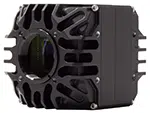
SXGA 1.3 MP SWIR camera for higher-definition inspection, microscopy, and machine vision.
View SenS 1280 ->
Long-exposure SWIR camera for low-light imaging and scientific applications.
View HiPe SenS ->
Compare qVGA, VGA, 1.3 MP, 2 MP, uncooled, TE-cooled, and extended-SWIR cameras.
Compare SWIR Cameras ->Review common SWIR applications including laser imaging, semiconductor inspection, material sorting, moisture detection, and scientific imaging.
Read the application guide ->Learn how working distance, lens choice, field of view, filters, and illumination geometry affect SWIR camera performance.
Read the optics guide ->Review SWIR calibration, software, image correction, triggering, and integration considerations for engineering systems.
Read integration guide ->Pembroke Instruments can help confirm whether the SenS 320V-ST, SenS 320V-ST-HS, VGA SenS 640, SenS 1280, SenS 1920, or another SWIR camera is the best match for your frame rate, sensitivity, field of view, optics, illumination, triggering, and software requirements.
Compare qVGA, VGA, 1.3 MP, 2 MP, uncooled, TE-cooled, and extended-SWIR camera options.
Match lenses, filters, microscope adapters, and SWIR illumination to your working distance and target size.
Review NITVision, SDK, triggering, ROI, frame rate, and data acquisition requirements.