
Thermal Imaging Scientific Guide to Long-Wave Infrared (LWIR)
Use this page as the hub for Pembroke Instruments thermal imaging resources. It connects the fundamentals of LWIR thermal radiation with practical guidance for selecting industrial thermal cameras, thermal microscope systems, optics, radiometry, and application-specific imaging solutions.
Start here if you need to understand LWIR thermal imaging, compare cooled vs. uncooled systems, design a fixed-mount inspection setup, estimate field of view, or move from a technical concept to a deployable thermal camera system.
Choose Your Thermal Imaging Path
The thermal imaging resource library is organized around the questions engineers and researchers ask most often: what physics matters, which detector technology is right, how optics affect spatial resolution, and how to integrate the camera into a lab or production environment.
Use the red CTA buttons below to move quickly from theory to products, applications, calculators, and expert support.
Core Thermal Imaging Resource Pages
These are the main thermal imaging technical resources that should receive strong internal links from this hub.

Infrared Radiation & Radiometry
Learn how thermal cameras convert emitted infrared radiation into quantitative temperature data.
- Blackbody radiation
- Radiometry basics
- Temperature measurement

Thermal Optics & System Integration
Understand LWIR lens materials, optical alignment, working distance, field of view, and integration constraints.
- Germanium and LWIR optics
- FOV and working distance
- Mechanical integration
Cooled vs. Uncooled Sensors
Compare microbolometers and cooled photon detectors for industrial monitoring, research, and high-speed thermal imaging.
- NETD and sensitivity
- Frame rate tradeoffs
- Cost and complexity

Advanced Engineering & Research Applications
Review how thermal imaging supports high-value research, automated inspection, process control, and system-level engineering.
- R&D thermal characterization
- High-speed events
- Production monitoring
- Quantitative thermal analysis
LWIR Scientific Guide
Use this guide to understand why LWIR imaging is often the best fit for room-temperature and industrial temperature measurement.
- Emitted vs. reflected light
- Atmospheric windows
- Emissivity and materials
- Calibration and radiometry
Thermal Imaging Products & Selection Tools
Connect the technical guide to product pages and tools visitors need when they are ready to specify a camera.
Industrial Thermal Imaging Cameras
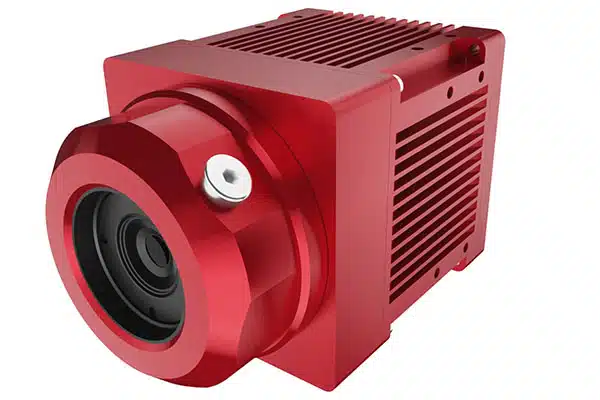
Compare fixed-mount IRSX smart thermal cameras for process monitoring, predictive maintenance, factory automation, and research.
Thermal Microscope Products
Explore close-focus and microscope-based thermal imaging options for electronics, semiconductors, micro-devices, and small targets.
Thermal FOV Calculator
Estimate target area, spatial resolution, and lens fit for IRSX thermal camera configurations before choosing optics.
Thermal Imaging Applications
Direct visitors from the scientific guide into use-case content where they can connect thermal imaging concepts to real measurement problems.
Process Monitoring
Temperature uniformity, heat treatment, sealing, bonding, ovens, furnaces, and automated production checks.
Predictive Maintenance
Motors, bearings, pumps, electrical cabinets, transformers, hot spots, and equipment reliability.
Electronics & PCB Inspection
Thermal maps of power electronics, PCBs, components, semiconductors, and micro-scale heating.
Factory Automation
Radiometric pass/fail inspection with ROIs, thresholds, alarms, PLC integration, and industrial protocols.
Key LWIR Concepts Covered in This Guide
Keep the educational value of the original page while making it easier for visitors to jump to the most relevant resource.
Thermal Radiation
All objects above absolute zero emit infrared radiation. Thermal cameras detect this emitted energy rather than relying on reflected visible light.
LWIR Atmospheric Window
The LWIR band is widely used for terrestrial and industrial imaging because it aligns well with room-temperature thermal emission.
Emissivity & Materials
Surface emissivity strongly affects temperature accuracy, especially for polished metals and reflective materials.
NETD & Sensitivity
Noise equivalent temperature difference helps define how small a temperature change a thermal camera can distinguish.
Radiometric Data
Radiometric cameras provide temperature data at each pixel, enabling quantitative analysis and automated inspection.
Optics & Spatial Resolution
Lens selection, working distance, and pixel coverage determine whether the thermal system can resolve the target feature.
Compare Thermal Imaging Application Requirements
Use this quick comparison to guide visitors toward the right resource, product page, or contact path.
| Application Area | Primary Need | Best Next Step |
|---|---|---|
| Industrial process monitoring | Continuous radiometric measurement, alarms, automation, and rugged fixed-mount operation. | View Cameras → |
| Electronics and PCB inspection | Close-focus optics, small target measurement, high spatial resolution, and quantitative data. | Thermal Microscope → |
| Research and thermal characterization | Radiometric data, repeatability, sensitivity, and analysis workflows for MATLAB or Python. | Advanced Applications → |
| Lens and field-of-view selection | Estimate target coverage, pixel size on target, and working distance constraints. | Use Calculator → |
| Technology education | Understand radiometry, emissivity, detector technology, and LWIR optics before selecting a system. | Start Learning → |
Need Help Selecting a Thermal Imaging System?
Pembroke Instruments works with engineers, researchers, and industrial teams to select and integrate LWIR thermal cameras, thermal microscope systems, optics, software, and radiometric measurement workflows.